The Truth in Two Places: Why InRisk Labs Builds Cyclone Protection on Data Continuity
Ensuring the 'truth' of a storm is captured by more than one witness to guarantee recovery even when the lights go out.


When a cyclone hits, you don't just need a "good" insurance policy. You need a fast one. You need a policy that doesn't argue, doesn't wait for a manual inspection, and doesn't get stuck in a backlog of paperwork.
This is the promise of parametric insurance. But for this promise to work, there is one thing that must be perfect: The Data.
“At InRisk Labs, we believe that a parametric contract is only as strong as the data that feeds it. If the data fails, the insurance fails. That is why we build our cyclone protection on two pillars: Data Continuity and Transparency. We don’t just track the storm; we ensure that the "truth" of that storm is captured by more than one witness, ensuring the process never stops. This is how we use a hierarchy of data to make sure your payout is guaranteed, even when the lights go out.”
The Simple Logic of Parametric Insurance
Parametric insurance is based on an "event." It works like a digital If-Then statement:
the wind speed hits 100 kmph at your location…
the policy is triggered for claim payment.
There is no argument about how many roof tiles were lost or whether the fence was already old. The wind blew at a certain speed, the "trigger" was hit, and the payment happens. It is fast, objective, and transparent. However, this simplicity creates a new challenge. Before the storm even starts, everyone involved-the client, the insurer, and the reinsurer-must agree on one thing: Whose data are we going to believe?
The Hierarchy: IBTrACS as Primary, RSMC as Secondary
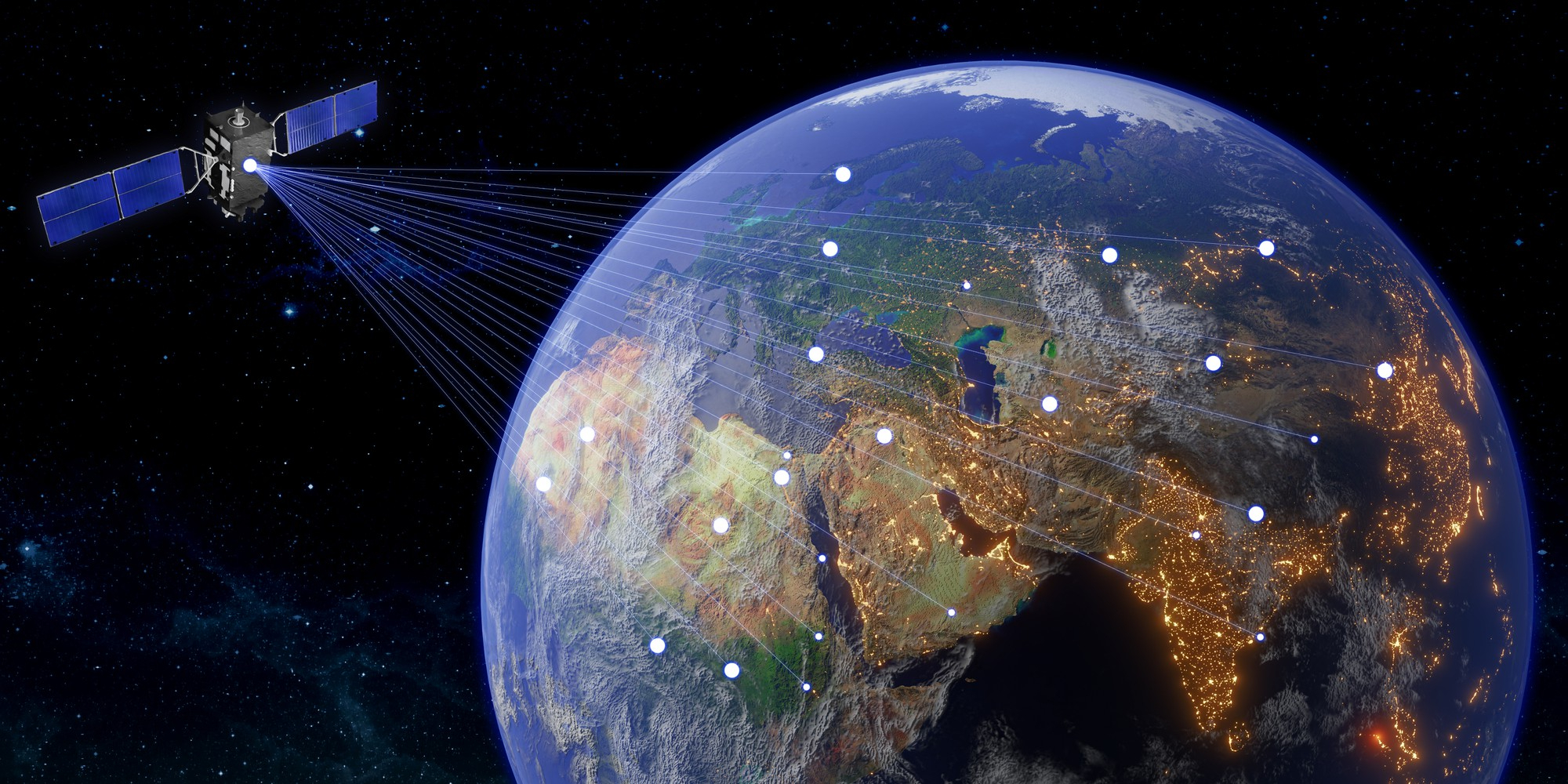
In a court of law, a case is much stronger if you have two witnesses. We apply the same logic to cyclone insurance. We don’t just rely on one source of information. We use a Hierarchy of Data that is written directly into every termsheet. We call this Fail-Safe Verification.
IBTrACS
In our standard configuration, IBTrACS (International Best Track Archive for Climate Stewardship) serves as the primary data source. IBTrACS is widely considered the "Gold Standard" by global reinsurers. It isn't just one weather station; it is a global system that synthesizes data from the world’s leading agencies, including NOAA in the US and various international centers. Because IBTrACS is internationally recognized, it makes the insurance process smooth. When IBTrACS records that a contractual trigger has been met, the settlement process begins automatically.
RSMC New Delhi
While we trust IBTrACS as our primary witness, we are also realistic. We know that technology is not perfect. That is why every InRisk Labs contract includes a Secondary Data Source, which is typically the RSMC-Tropical Cyclone Report issued by the India Meteorological Department (IMD). This is a critical distinction: We only use the RSMC data if the Primary Source is unavailable due to an "exigency"-a technical failure or a data gap that prevents the primary trigger from being verified. This ensures Data Continuity; the contract doesn't break just because one stream of information does.
The Reality of Data Failures
People often assume that modern satellites and computers never fail. But storms are violent. They destroy the very infrastructure we use to monitor them. Satellites can experience signal interference, ground stations can lose power, and communication hubs can be cut off. If an insurance policy only has one data source, and that source goes offline during a major event, the policyholder is left in a "data vacuum." You know the storm happened, and the insurer knows it happened, but because the "official" data is missing, the payout gets stuck. At InRisk Labs, we consider that unacceptable. We believe your protection should have the same uptime as the most critical financial systems.
A Real-Life Lesson: The July 2025 Blackout
The necessity of Data Continuity was proven in real life, as documented in the 2025 RSMC Tropical Cyclone Report. On July 1, 2025, a major electrical line failure struck the MMDRPS facility, the central hub for satellite data processing in the region. For three days, the primary stream of high-resolution imagery and data products was interrupted.
In a traditional setup, or a poorly structured parametric policy, this outage would have been catastrophic. Triggers could not be confirmed, and claims would have stalled because the "If" in the "If-Then" statement couldn't be proven. This is where our structure shines: Because InRisk Labs termsheets are built with an explicit secondary fallback, an event occurring during such a blackout remains fully covered. If the primary system is down, the contract automatically pivots to the secondary "witness." Your protection is tied to the physical reality of the storm, not the uptime of a single server. This is true technical continuity.
Why This Matters for Your Business
Uninterrupted Observation
When a cyclone is bearing down on your operations, you have enough to worry about. You shouldn’t have to wonder if a satellite downlink has failed or if a ground station has lost power. Our dual-source approach ensures that even if the primary data stream is interrupted, the event is still recorded by a second witness.
Global Trust
By using IBTrACS as a primary source, we provide a level of transparency that global reinsurers expect. It shows that the trigger is based on a consensus of global and local scientific observation.
Speed of Recovery
Because the fallback is pre-agreed and written into the contract, there is no delay. We don't have to hold a meeting to decide which data to use if the primary source fails; the contract simply follows the pre-set path.
The InRisk Labs Philosophy: Managing Uncertainty
At the end of the day, people buy insurance to manage uncertainty. They are protecting their business and their future against the physical impact of a cyclone. However, there is a hidden layer of risk that often goes unnoticed: Data Uncertainty.
Even the most sophisticated systems can face hurdles. Will the satellites stay online? Will the official report be delayed by a power failure? Will different agencies agree on the exact wind speed? Our mission is to eliminate this second layer of worry. We don't just hope the data works; we assume it might fail. By using authoritative records like the 2025 RSMC Report as a roadmap for understanding storm behavior and system limits, we build our protections to expect the unexpected.
We believe that including a secondary data source in our contracts is more than just a backup plan-it is Responsible Design. It is about acknowledging that even the best technology can face disruptions, and being smart enough to have a fail-safe ready before the clouds even form. This ensures that while the storm might be unpredictable, your recovery is not.
Conclusion
Whether it is a "looping" storm that changes direction seven times or a data center that loses power for three days, the weather will always find ways to surprise us. Our mission at InRisk Labs is to make sure your insurance payout is the one thing that isn't a surprise.
By building our parametric triggers on a solid hierarchy of primary and secondary data, we ensure that the truth is always recorded. When the storm hits, the buildings might shake, and the power might go out-but the data will hold. And because the data holds, your business can recover. We don’t just insure against the wind; we insure against the uncertainty of the data itself.